
Walter Writes AI: review, pricing and alternatives
What is Walter Writes AI?
When I first encountered Walter Writes AI, it presented itself as a contender in the increasingly crowded space of AI writing assistants. At its core, the tool aims to address a specific modern dilemma: the need to make AI-generated text sound more human and, conversely, to detect when text has been produced by an AI. Its primary purpose, as I understand it, is to offer a solution for creators, students, and professionals who want to leverage AI for efficiency but need to ensure their output maintains a natural, human tone.
In essence, Walter Writes AI positions itself as a dual-purpose platform. On one side, it's an AI humanizer, designed to take robotic, predictable AI prose and transform it into something that reads as if a person wrote it. On the other, it boasts an AI detector, analyzing language structures to identify AI-generated content. This dual functionality is particularly appealing in an era where AI detection is becoming a significant concern for academic integrity and content authenticity.
The market for AI writing tools is saturated, and many promise similar capabilities. Walter Writes AI enters this arena with the ambition to be a reliable bridge between raw AI output and human readability, while also providing a means to police AI usage. My initial impression was that it sought to simplify the process of refining AI text, aiming for clarity and natural flow that often eludes early-stage AI models. It’s trying to carve out a niche by offering both offensive (humanization) and defensive (detection) capabilities in one package.
Key Features: Humanizer & Detector
Walter Writes AI primarily revolves around its two namesake features: the AI Humanizer and the AI Detector. The humanizer is what initially drew my attention, promising to take AI-generated content and rewrite it to sound more natural and less robotic, all while preserving the original ideas. What I found particularly interesting is the claim that it achieves this without introducing grammatical errors or changing the core message, which is a common pitfall for many rephrasing tools.
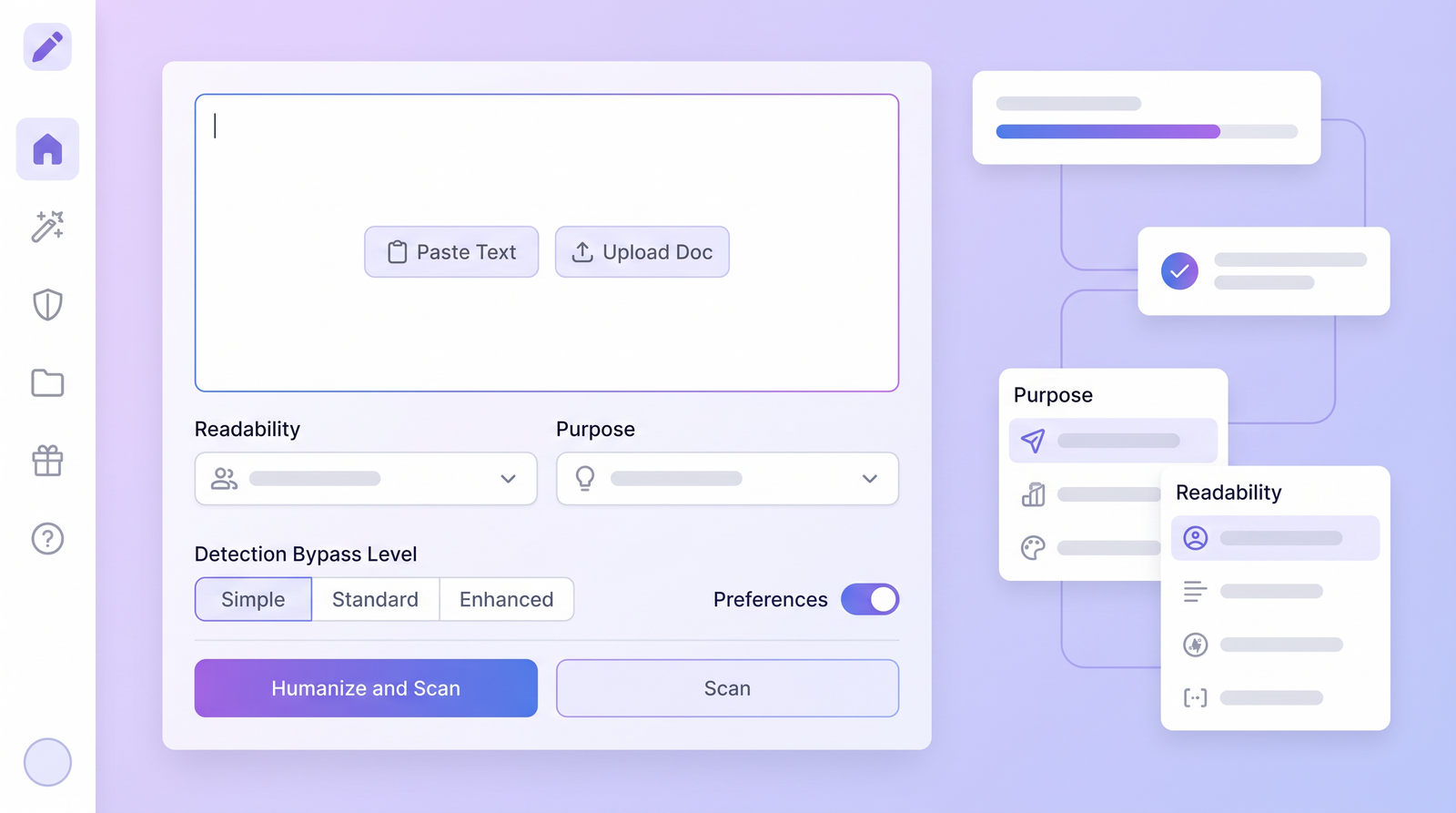
For paid users, Walter Writes AI reportedly offers different humanization modes, specifically 'Simple,' 'Standard,' and 'Enhanced.' My experience on the free plan limited me to the 'Simple' mode, which is important context for my performance observations later. The expectation is that the 'Standard' and 'Enhanced' modes would be more sophisticated in their ability to bypass detectors, offering varying degrees of stylistic alteration and complexity. The tool emphasizes creating a more natural sentence rhythm and avoiding the repetitive templates often seen in raw AI output, which is crucial for blogs and other written content.
Beyond humanization, the platform includes an 'Academic AI Detector.' This tool is designed to analyze the language structure of a given text to determine if it was AI-generated. It's pitched as a solution for those concerned about AI flagging, particularly in educational settings. While the humanizer aims to *create* human-like text, the detector aims to *identify* AI-generated text, providing a full-circle approach to managing AI content. The detector focuses on scrutinizing patterns that betray machine authorship, such as predictable phrasing or overly formal language that lacks human nuance.
User Experience and Interface
My first foray into Walter Writes AI's user experience was a mixed bag, to say the least. While some users report a 'smooth interface' and 'fast results,' my initial impression was colored by a few notable annoyances. The sign-up process itself wasn't overly complicated, but it felt like a hurdle just to get a taste of the tool's capabilities. You're required to register even for the limited free tier, which, for me, always feels like an unnecessary barrier to entry for a quick test drive.
Once inside, the interface proved to be quite cluttered. There’s a persistent 'ongoing sale' banner with a countdown timer that, from what I could tell, simply resets, creating a false sense of urgency. This kind of marketing tactic can be off-putting and makes the platform feel less transparent. The overall layout often felt confusing, especially for a first-time user trying to navigate between the humanizer and the detector, and understanding the nuances of the limited free functionality versus paid features.
“The Walter Writes interface feels cluttered. The site constantly promotes an ‘ongoing sale’ with a countdown timer that resets. The layout can confuse first-time users.”
Furthermore, access to crucial information, like the full breakdown of AI detection results for humanized text, is hidden behind a paywall. This lack of transparency, especially when evaluating a tool designed to bypass detection, is a significant frustration. It means you can't truly gauge its effectiveness without committing financially, which undermines trust. While it aims for simplicity, these design choices and paywall placements ultimately detract from what could otherwise be a more straightforward and user-friendly experience.
Performance: Humanization & Detector Bypass
This is where the rubber meets the road for any AI humanizer, and my experience with Walter Writes AI was, frankly, inconsistent and often disappointing. The promise is to rewrite AI text to sound natural, retain ideas, and avoid robotic quirks. On the positive side, when it worked well, the output did indeed sound more natural and clearer, feeling like a human had refined the text without altering the core message. Some users even praised its ability to transform writing into something much more natural, akin to a ghostwriter's touch.
However, the real test is its ability to bypass major AI detectors, and this is where Walter Writes AI largely failed in my trials. I ran AI-generated content through its humanizer and then subjected the output to popular detectors like GPTZero and ZeroGPT. The results were stark: in many instances, the 'humanized' text was still flagged as 100% AI-generated, sometimes even by Walter's own detection tool. This suggests that the rewriting process, at least in the 'Simple' mode I accessed, didn't sufficiently alter the underlying patterns that AI detectors look for.
Beyond outright detection failure, I noticed several stylistic quirks that betrayed its machine origins. There was a tendency for 'semicolon spam,' with the tool inserting them in places where a comma or full stop would be more natural. I also observed 'weird repetition' of words or phrases within short sentences, which is a dead giveaway for AI. Furthermore, 'parenthetical clutter,' like frequent use of examples in parentheses (e.g., storms, droughts), became a recurring pattern, making the text feel forced and artificial rather than genuinely human. These inconsistencies mean that while some outputs might occasionally slip past a detector or sound good, relying on it for critical assignments or content where detection is a risk feels like a gamble.
Walter Writes AI Detector Accuracy
While the humanization aspect of Walter Writes AI left me with reservations, its AI detection tool proved to be a more reliable component of the platform. Unlike its humanizer, which often struggled to bypass external detectors, Walter Writes AI's own detector demonstrated a relatively high degree of accuracy in identifying content generated by various AI models, including ChatGPT, Gemini, and Claude. This suggests that the underlying algorithms for detection are robust, even if the humanizer isn't always successful in evading them.
I found it somewhat ironic that the tool's detector was capable of flagging content that its own humanizer had processed as AI-generated. This particular observation highlights a significant disconnect within the platform: the detection capabilities seem to outpace the humanization capabilities. It's a double-edged sword; while it's good to have an accurate detector, it simultaneously exposes the limitations of its companion feature.
An interesting test involved running text that had been successfully humanized by *other* advanced humanizers through Walter Writes AI's detector. In one instance, a text humanized by TwainGPT was submitted, and Walter Writes AI's detector confidently identified it as '100% Probability Human generated.' This outcome confirms that its detector can indeed differentiate between genuinely human-like text and AI-generated content. So, if your primary need is to check for AI authorship, Walter Writes AI's detector appears to be a reasonably effective tool, even if its humanizer isn't always up to the task of fooling it.
Pricing, Plans, and Free Trial
Understanding the pricing structure of Walter Writes AI can be a bit of a maze, especially with the constant 'ongoing sale' promotions that feature a perpetually resetting countdown timer. This tactic, while common, can be confusing and makes it hard to discern the actual, stable pricing. What I can tell you is that there's a significant leap from the very limited free tier to the paid subscriptions, which range from approximately $7 to $56, depending on the plan and whether you catch one of these 'sales.'
The free trial offers a glimpse into the humanizer and detector, but it's quite restrictive. You typically get around 300 free words for humanization and a mere three days of free AI detection scans. While this is enough to run a quick test, it barely allows you to 'do squat,' as one user put it, especially when trying to assess its long-term reliability or its effectiveness against multiple detectors. After this brief trial, access becomes heavily restricted, pushing you towards a paid plan to unlock full functionality, including the 'Standard' and 'Enhanced' humanization modes that are supposedly more effective.
My experience confirmed that the free plan only provides access to the 'Simple' humanization mode. To access the more advanced modes, which are touted as better at bypassing detectors, you need to upgrade. This tiered feature access, coupled with the aggressive sales tactics and the paywall for detailed detection results, means that budgeting for Walter Writes AI requires careful consideration. It’s not just about the monthly fee, but about whether the paid features truly deliver on their promise, given the free tier's limitations.
| Plan | Price (approx.) | Best for |
|---|---|---|
| Free Trial | $0 | Quick humanizer/detector test (300 words, 3 days) |
| Basic (Monthly) | $7 - $15 | Occasional use, access to 'Simple' humanization |
| Standard (Monthly) | $20 - $35 | Regular use, 'Standard' humanization, more words/scans |
| Premium (Monthly) | $40 - $56 | Heavy users, 'Enhanced' humanization, maximum words/scans |
Pros and Cons
After spending some time with Walter Writes AI, I've compiled a list of its advantages and disadvantages based on my observations and common user feedback. On the positive side, when its humanizer works well, it genuinely produces text that sounds more natural and less robotic. It does a decent job of preserving original ideas and enhancing clarity, which can be a real time-saver for drafting content. Some users have found it helpful for improving the flow and rhythm of blog posts or assignments, making the writing clearer and more engaging. The interface, despite its clutter, is also reported as 'smooth' by some, and results typically come back quickly.
However, the cons are significant and often outweigh the pros, especially for critical applications. The most glaring issue is its inconsistent ability to bypass major AI detectors; many tests show it failing, sometimes even being flagged by its own detector. This inconsistency makes it unreliable for academic submissions or professional content where detection is a serious concern. The free tier is extremely limited, practically forcing you to register and then upgrade to truly test the tool. The interface itself can be cluttered with persistent 'ongoing sale' banners, and crucial detection results are often paywalled, leading to a frustrating user experience.
Furthermore, I observed several stylistic quirks in its humanized output, such as 'semicolon spam,' 'weird repetition' of words, and 'parenthetical clutter,' which can still betray its AI origins. The overall reliability for critical tasks is questionable due to these random behaviors and stylistic tells. There are also reports of poor customer service, adding another layer of frustration should issues arise. Here's a brief summary:
- Pros: Natural-sounding output (when successful), preserves ideas, enhances clarity, quick results, some users find the interface smooth.
- Cons: Fails to bypass major AI detectors consistently, inconsistent results, introduces stylistic quirks/typos, limited free tier, cluttered interface with aggressive sales tactics, paywalled detection results, reported poor customer support.
Customer Support and Reliability
When it comes to customer support and overall reliability, Walter Writes AI presents a concerning picture based on the available feedback. Unlike some services where users praise responsive support, the recurring sentiment for Walter Writes AI leans towards 'poor customer service.' This lack of positive mentions, coupled with direct complaints, suggests that if you encounter issues or have questions, getting timely and effective assistance might be a challenge.
Reliability, in my experience, is also a significant weak point. As I mentioned earlier, the humanizer's performance was often random, producing wildly different detection scores for similar inputs. This kind of inconsistency is a major red flag. For any tool designed for tasks like academic assignments or client work, where a single submission matters, such unpredictable behavior is simply unacceptable. You can't trust a tool that gives you a 29% AI score one minute and a 100% AI score the next, using the same base content.
Beyond the detection failures, some users have expressed confusion about how to effectively use certain features, finding the outputs not always what they expect. This points to potential gaps in user guidance or an interface that isn't as intuitive as it claims to be. A reliable tool should not only perform its function effectively but also guide users to achieve optimal results and provide solid support when things go wrong. Unfortunately, Walter Writes AI appears to fall short on both these fronts, making it a risky choice for users who depend on consistent, trustworthy results.
Who is Walter Writes AI For?
Given its strengths and significant weaknesses, Walter Writes AI isn't a one-size-fits-all solution. I see it potentially appealing to a very specific subset of users, particularly those who are primarily looking for a quick and easy way to make AI-generated text *sound* better for informal contexts. If you're writing a personal blog post, a casual email, or product descriptions where the risk of AI detection is low and the main goal is simply to improve flow and clarity, then Walter Writes AI might offer some value.
Some users, like students, have found it helpful for saving time on assignments, especially when they need to rephrase content to sound more natural. However, I would strongly caution against relying on it for high-stakes academic submissions where AI detection is rigorously applied. The tool's inconsistent performance against major detectors makes it too risky for anything that carries significant consequences. It's simply not something I would trust for school, clients, or any scenario where you have only one shot at a submission.
Ultimately, Walter Writes AI might be for the curious individual who wants to experiment with AI humanization without a deep dive into more sophisticated tools. It could serve as a basic text clarifier or rephraser. However, if you are a professional writer, a student facing strict AI detection policies, or anyone needing reliable, consistent results for important content, you would likely find Walter Writes AI unsuitable. Its limitations in detector bypass and its general inconsistency mean that users with critical needs should look elsewhere, perhaps comparing its capabilities against others on Top10k to find a more robust solution.
Final Verdict: Is Walter Writes AI Worth It?
After thoroughly examining Walter Writes AI's capabilities, limitations, and pricing, my final verdict is that it struggles to justify its cost and prominent position in the AI tool market. While it does offer glimpses of effective humanization, occasionally producing natural-sounding text that preserves original ideas, these instances are often overshadowed by significant inconsistencies and outright failures to bypass major AI detectors. The core promise of an AI humanizer is to make AI content undetectable, and Walter Writes AI frequently falls short on this critical front.
The user experience further detracts from its value. The aggressively marketed 'ongoing sales,' the cluttered interface, and the paywalling of essential information create a sense of distrust and frustration. The severely limited free trial also makes it difficult to adequately assess its true performance before committing financially. When a tool cannot reliably perform its primary function, especially one as crucial as detector bypass, its utility becomes severely compromised.
For users who prioritize writing quality and clarity in low-stakes environments, Walter Writes AI might offer some superficial improvements to AI-generated text. However, for anyone needing a reliable solution for academic integrity, professional content, or any situation where AI detection is a real concern, I cannot recommend it. The unpredictable nature of its humanizer, coupled with its questionable customer support and confusing pricing, makes it a risky investment. There are more consistent and transparent alternatives available that offer better value and more trustworthy results.
Full profile and live ranking: https://top10k.com/ai/walter-writes-ai
Published by

Top10k Tools operates as a browser-based toolkit packed with thousands of free online tools created to get things done faster.
It spans everything from SEO and coding to file converters, image tools, and handy calculators. Everything works directly online, making them quick to access anywhere.
The goal behind Top10k Tools is reaching 10,000 useful web tools covering nearly every everyday task.
If your work happens online, there's likely a tool that fits. Explore the full collection.
Frequently asked questions
What is Walter Writes AI's core purpose?
Walter Writes AI is designed to serve two main functions: to 'humanize' AI-generated text, making it sound more natural and less robotic, and to detect whether a piece of text has been created by an AI. It aims to help users refine AI content while also providing a tool to identify it.
Does Walter Writes AI successfully bypass AI detectors?
Based on my testing and user feedback, Walter Writes AI's humanizer is inconsistent and often fails to bypass major AI detectors like GPTZero and ZeroGPT. In many cases, text processed by Walter's humanizer was still flagged as AI-generated, sometimes even by its own detection tool.
How accurate is Walter Writes AI's own detector?
Interestingly, Walter Writes AI's own detector is relatively accurate at identifying AI-generated content from various models. It can also correctly identify genuinely human-written or effectively humanized text, indicating its detection capabilities are more robust than its humanization features.
Is there a free plan or trial for Walter Writes AI?
Yes, Walter Writes AI offers a very limited free trial. This typically includes around 300 free words for humanization and three days of free AI detection scans. However, full functionality and advanced humanization modes are paywalled, requiring a paid subscription.
What are the pricing plans for Walter Writes AI?
Walter Writes AI offers tiered pricing plans that typically range from approximately $7 to $56 per month, depending on the features and word count included. These prices are often presented under 'ongoing sale' promotions, which can make the actual cost somewhat ambiguous.
Who would benefit most from Walter Writes AI?
Walter Writes AI might be suitable for individuals needing basic text clarification or rephrasing for low-stakes content like personal blogs or informal communications, where AI detection is not a major concern. It is not recommended for critical academic or professional work due to its inconsistency.
Are there any common complaints about Walter Writes AI?
Common complaints include its inability to consistently bypass AI detectors, inconsistent output quality (sometimes introducing stylistic quirks), a cluttered interface with aggressive sales tactics, a very limited free tier, and reports of poor customer service.
Is Walter Writes AI worth the investment?
Given its inconsistent performance in bypassing AI detectors, confusing pricing, and user experience issues, Walter Writes AI struggles to justify its cost for high-stakes applications. For reliable AI humanization and detection, users may find more effective and transparent alternatives on the market.